
17 June 2025: Avihai Shivtiel (Leeds), Jews and Muslims relations as reflected in the Cairo Genizah documents
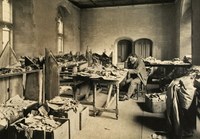
The academy project Bibliotheca Arabica invites Prof. em. Avihai Shivtiel to give a guest lecture at the academy on 17 June. The lecture will be held in English. Interested visitors are very welcome.
17.06.2025, 18:00 - 20:00
Sächsische Akademie der Wissenschaften zu Leipzig
Karl-Tauchnitz-Straße 1, 04107 Leipzig
Prof Avihai Shivtiel was born in Palestine (Israel). He studied Arabic language and literature, Islamic studies and Hebrew language and linguistics at the Hebrew University of Jerusalem, graduating with a B.A. and M.A. (1971). He also taught Arabic at the Hebrew University and the Bar-Ilan University. From 1972 to 1978, he taught Hebrew and Arabic at the University of Cambridge, where he also obtained his doctorate in Arabic linguistics. In 1979 he moved to the University of Leeds, where he taught Semitic languages, literatures and cultures and was Head of the Department of Semitic Studies and later Arabic Studies. At the same time, he worked as a Senior Research Fellow at the Taylor-Schechter Genizah Research Unit at the University of Cambridge until his full retirement in 2007.
His publications include several books as well as numerous articles, reviews and entries for the three encyclopaedias of Islam, Language and Linguistics and Arabic Language and Linguistics (Source).
Jews and Muslims relations as reflected in the Cairo Genizah documents
The encounter between Jews and Arabs began from time immemorial and continues to this very day. However, the relations between the two communities have known ups and downs. This state of affairs has continued, especially when Jews lived under Muslim rule across the Muslim empire. The Cairo Genizah, that hoard of documents, which surfaced in the second half of the 19th century and which has been researched for the last 125 years, reflects almost a century of the ups and downs of the relations between Jews and Muslims, mainly during the Middle Ages.
8 July 2025: Daniel Kinitz, "Data-driven intellectual history? Building a research platform for Arabic manuscript cultures"
Full title: Data-driven intellectual history? The challenges of building a research platform for Arabic manuscript cultures
What do we know about the premodern intellectual history of the Arab-Islamic world, and where do gaps in our understanding persist? Which technologies can enhance accessibility and support research? What challenges arise in data-driven approaches to historical scholarship? The lecture explores these questions through the long-term research project 'Bibliotheca Arabica,' which offers fresh insights into Arab literary traditions by setting up an extensive database on Arabic manuscripts and manuscript studies.
Lecture at the Franco-German Summer School: "Open(ing) Science? Digital Humanities in Area Studies", Leipzig University, 8 July 2025
https://recentglobe.uni-leipzig.de/en/zentrum/details/event/opening-science-digital-humanities-in-area-studies
9 July 2025: Boris Liebrenz, "Crossing Borders with Books: The Mobility of Libraries and Their Owners Through the Example of Abū Bakr al-Širwānī (d. 1135/1723)"
https://www.facebook.com/plugins/post.php?href=https%3A%2F%2Fwww.facebook.com%2Fvevian.farok%2Fposts%2Fpfbid0RBdSTCLA2beMrinnSFnw2fVtvjsrmppig5sgNnfUZERRgPgDbxLsLemm5qC4K17il&show_text=true&width=500" width="500" height="838" style="border:none;overflow:hidden" scrolling="no" frameborder="0" allowfullscreen="true" allow="autoplay; clipboard-write; encrypted-media; picture-in-picture; web-share
10 July 2025: Rawda El Hajji, "Reconstructing Buda Manuscripts: The Case of Süleyman Efendi's Multilayered Corpus"
On July 10, 2025, doctoral fellow Rawda El Hajji presented her work "Reconstructing Buda Manuscripts: The Case of Süleyman Efendi's Multilayered Corpus“ at Once, We Were Here: Traces of Mobility across the Ottoman Empire, Ludwig-Maximilians-Universität in Munich.
12 September 2025: Bibliotheca Arabica Panel at the 35th Deutscher Orientalistentag (DOT), Erlangen
The Bibliotheca Arabica team presented a panel under the title “Towards a New History of Arabic Literature”, chaired by Dr. Boris Liebrenz (Sächsische Akademie der Wissenschaften zu Leipzig).
The presentations included:
-
Dr. Daniel Kinitz & Martin Reckziegel – Building a Knowledge Graph on Arabic Manuscript Cultures: Challenges and Limits of Automated Optimisation (10:00)
-
Dr. Boris Liebrenz – The Archive of Arabic Literature: Ottoman Constantinople and the Library of Abū Bakr al-Širwānī (d. 1135/1723) (11:00)
-
Dr. Stefanie Brinkmann – Manuscripts Telling Stories: Commentaries on al-Baghawī’s Maṣābīḥ al-sunna in the Ilkhanid and Post-Ilkhanid Periods (11:30)
-
Dr. des. Nadine Löhr – Astrological Manuscripts in the Age of Print: Ptolemy’s Tetrabiblos in the 19th and 20th Centuries (12:00)
-
Fatme el Bazzal – Mobile scholars and their transregional entanglements: the endowed collection of Asad Allāh al-Khātūnī al-ʿĀmilī in Astan Quds Library in Mashhad, Iran (12:30)
-
Prof. Dr. Verena Klemm – Regional and Transregional Ismaʿili Literary Tradition in Syria (13:00)
-
Find the full programme here
11 September 2025: Rawda El Hajji at the 35th Deutscher Orientalistentag (DOT), Erlangen
Within the panel “Building and Preserving Libraries in Ottoman Lands and the Horn of Africa – An Interdisciplinary Approach”, Rawda El Hajji (Sächsische Akademie der Wissenschaften zu Leipzig) presented her paper “The Corpus of Süleyman Efendi and its Multilayered Manuscripts” (16:30).
The panel also included the following presentations:
-
Joud Nassan Agha (Universität Hamburg, Germany) – A Court Session in Context: Understanding Judicial Proceedings and their Relation to Library Preservation in Ottoman Damascus (16:00)
-
Nimet İpek (Sabancı University, Turkey) – Confiscating Books in the First Half of the Eighteenth-Century Ottoman Empire under the Reign of Mahmud I (17:00)
-
Michael Hensley (Universität Hamburg, Germany) – Owning and Preserving Libraries in Medieval Ethiopia and Eritrea (17:30)
Find the full programme here
16 September 2025: Daniel Kinitz, "Arabographische Texterkennung von Referenzwerken – Herausforderungen beim Einsatz Deep-Learning-basierter Anwendungen"
Daniel Kinitz: "Bibliotheca Arabica: Arabographische Texterkennung von Referenzwerken – Herausforderungen beim Einsatz Deep-Learning-basierter Anwendungen".
Vortrag beim Panel "DH @ MENA(-LIB.)" der der Universität Bochum und des FID Nahost im Rahmen des Digital Humanities Days an der Ruhr-Universität Bochum (RUB), 16.09.2025.
11 September 2025: Fatme el Bazzal at the 35th Deutscher Orientalistentag (DOT), Erlangen
Within the panel “The Shii Deccan and Safavid Iran”, Fatme el Bazzal (Lebanese University of Beirut) presented her paper “An ʻĀmilī scholar at work: Muḥammad ibn ʻAlī ibn Khātūn in the Deccan India” (17:30).
The panel also included the following presentations:
-
Dr. Alberto Tiburcio (Ludwig-Maximilians-Universität München, Germany) – A Safavid Legal Manual in Qutub-Shahi Hyderabad (16:00)
-
Dr. Mahdieh Tavakol (Universität Hamburg, Germany) – The Transfer of Books from Shiʿi Deccan to Safavid Iran through Endowment (16:30)
-
Prof. Dr. Sajjad Rizvi (University of Exeter, United Kingdom) – Naturalising the Shi'i Tradition in the City of Haydar (17:00)
Find the full programme here
Programme out for "Libraries of the Ottoman World" Dublin, 6-8 November, 2025
Conference Programme
Wednesday 5 November 2025
1730-1830 Keynote Lecture 1:
Prof. Tülay Artan (Sabanci University, Istanbul), What you are looking for is in the library
Thursday 6 November 2025
0900-1015 Session 1: The Palace Treasury
- Dimitri Kastritsis – “Bayezid II’s Library and Fifteenth-Century Ottoman Perspectives on World History”
- Emine Fetvacı – “The Imperial Library and Artistic Production”
- Nil Baydar – “Rebinding Practices in the Library of Sultan Mehmed II: Technical Structures and Material Properties of Early Manuscripts Rebound in Textile during the 15th Century”
1015-1130 Session 2: Metropolitan elites
- Fatih Yücel – “Beyond the List, Beneath the Shelves: Intentionality and Identity in the Library of Üveys Pasha (d. 1591)”
- Elif Derin – “Family Continuity in the Preservation and Expansion of Ottoman Waqf Libraries: The Case of the Aşir Efendi Library”
- Ioannis Kyriakantonakis – “Constantinople’s ‘Little Jerusalem’: The Brotherhood of the Holy Sepulchre and Their Metochion since the 17th Century”
1145-1300 Session 3: After Köprülü
- Tufan Kara – “Tracing Manuscript Histories: The Paratextual Notes in the Fâzıl Ahmed Pasha Collection of the Köprülü Library”
- Amal Cavender – “From Mosque Collections to Knowledge Centres: The Materiality and Imperial Dynamics of Ottoman Libraries (1678–1754)”
- Tahsin Hazirbulan & Mehmet İnbaşı – “A Library from the Palace to the Provinces: ‘Bostancı Ocağı Library’” via zoom
1400-1515 Session 4: Imperial Reform: Sultan Mahmud I
- Menderes Velioğlu – “Light of Osman, Shadow of Mahmud, Darkness of Others: With Whose Books was the Nuruosmaniye Library Founded?”
- Nimet İpek – “Erased Histories of Libraries: Tracing Defaced Ownership and Endowment Notes in the Libraries Founded by Mahmud I”
- Kadir Şahin & Nurefşan Ülker – “The Connection between the I. Mahmud Library and the Museum of Turkish and Islamic Arts in Istanbul”
1515-1630 Session 5: Sufi networks
- Ekin Can Göksoy – “Libraries before Libraries: Personal and Institutional Book Collections, and Reading Networks in Early Modern Ottoman Bursa”
- Aslıhan Gürbüzel – “Between the Imperial and the Local: The Tekke Library of the Gazzizade Family in Bursa”
- Tobias Heinzelmann – “The Library of an Ottoman Sufi Convent and the Waqf of Halet Efendi”
1645-1800 Session 6: Reading across Empire
- Ghayde Ghraowi – “Arabic Literature, Ottoman Libraries: The Rayḥānat al-alibbā at the Imperial Centre”
- Renaud Soler – “The Law of the Market: Transfers of Manuscripts of a Life of the Prophet from the Arab Provinces to Istanbul between the 15th and 19th Centuries”
- Akif E. Yerlioğlu – “Libraries as Spaces of Medical Knowledge Production and Circulation in the Early Modern Ottoman Empire”
Friday 7 November 2025
0930-1045 Session 7: Ottoman Heartlands
- Büşra Aktaş Kütükçü & Esra Karayel Muhacır – “Sustaining Ottoman Intellectual Heritage: A Study on the Bolu Yıldırım Bayezid Madrasa Library and Its Collection”
- Agron Islami & Orges Drançolli – “Traces of Ottoman-Style Libraries in Kosovo: The Case of the Hadum Library”
- Rawda El Hajji – “The Corpus of Süleyman Efendi and Its Multilayered Manuscripts”
1045-1200 Session 8: Bilād al-Shām
- Avinoam Stillman – “The Library of Jacob Tsemah (d. 1666): A Sephardi Scholar in the Ottoman World”
- Nir Shafir – “The Private Library of ʿAbd al-Ghanī al-Nābulusī (1641–1731): An Intellectual, Cultural, and Economic Perspective”
- Boris Liebrenz – “Bibliophilia in 18th-century Damascus: The Book Collection of ʿAbdallāh b. Zayn al-Dīn al-Buṣrawī”
1210-1300 Session 9: Miṣr: Cairo Libraries
- Stephanie Luescher – “Al-Muẓaffarī’s Books: A Private Collection in early Ottoman Cairo” via zoom
- Mohamed Abouseif Abdelazeim Khedr – “Ottoman Libraries in Cairo in Light of Archaeological Evidence and Waqf Documents” via zoom
1400-1515 Session 10: Networking peripheries
- Augustin Jomier – “Is the 19th-Century Tunisian Elite’s Bibliophily an Ottoman Bibliophily?”
- Paul Love – “Migrant Manuscript Libraries in Late-Ottoman Trablus al Gharb”
- André Binggeli & Alice Croq – “Syriac Monastic Libraries and Their Networks: Transmission of Knowledge and Cultural Identity in the Ottoman Period”
1515-1630 Session 11: Late Urban Libraries
- Joud Nassan Agha – “Books, Endowments, and Legal Frameworks: The Library of Khālid al-Naqshabandī in Late Ottoman Damascus”
- Matteo Pimpinelli – “Private Libraries in the Ottoman World: Yūsuf Ṣayfī, his Manuscript Collection, and Book Culture in 13th/19th-Century Bilād al-Shām”
- Garrett Davidson – “Two Late-Ottoman Private Libraries Preserved in Princeton University Library’s Yahuda Collection”
Saturday 8 November 2025
0930-1045 Session 12: Out of Empire: Exiles
- Boris Adjemian – “Ottoman Armenian Heritage and History in a Diasporic Library in Paris”
- Moya Carey – “Ottoman exile in Cairo: volume 4 of Darir’s Siyer-i Nebi (CBL T 419)”
- Eve Lacey – “Bound Abroad: Itinerant Collections of Ottoman Books at Cambridge University”
1100-1240 Session 13: Extractions I: Demand
- Seyed Mohammad Hossein Hakim – “Reverse Transmission of Books from the Ottoman Empire to Iran: Ottoman Royal Manuscripts in Iranian Libraries”
- Jonathan Haddad – “The Snake in the Library: François Sevin’s Mission to Istanbul, 1728–30”
- Michael Erdman – “Long Distance Bargaining: Constructing a Syriac Book Trade through the Letters of Jeremiah Shamer and Eduard Sachau”
- Güler Doğan Averbek – “Planning to Plunder the Libraries of Istanbul during the Balkan Wars”
1400-1515 Session 14: Extractions II: Supply
- Kiraz Perinçek Karavit – “‘Portrait of a Dervish’: Imaging a Sufi Bibliophile in the Long Nineteenth Century”
- Evyn Kropf – “Lives and Afterlives of the Gümüşhanevî Foundation Libraries”
- Dominique Akhoun-Schwarb – “The Tiflis Manuscripts: Tale of a Journey”
1515-1630 Session 15: Retrospection: Empire in the Republic
- Christiane Czygan – “Inaccessible Treasures: Manuscripts in the Istanbul Archaeology Museum’s Library”
- Baki Tezcan – “Endowing a Hegemony: Ottoman Libraries and Sunni Islam”
1700-1800 Keynote Lecture 2:
Prof. Konrad Hirschler (Centre for the Study of Manuscript Cultures, University of Hamburg), Reflections on Ottoman library studies – Perspectives and challenges
September 9 2025: Boris Liebrenz, "The Library of the Amīr al-Muʾminīn in 17th-century Yemen. Evidence from an Arabic Letter" at the 35th Deutscher Orientalistentag (DOT), Erlangen
Abstract:
While Yemen’s libraries were part of a larger regional book culture, there are features that set them apart and that in many cases allow to instantly identify books that had once been in Yemen. One of the most intriguing features of Zaydī Yemeni book culture during the early modern period is the outsized role of the ruler’s family, the amīr al-muʾminīn, in its libraries. A surprising number of manuscripts that used to be in the Yemen during the 16th to 19th centuries feature the note of at least one person identifying as either an amīr al-muʾminīn, the child or close relative of one.
This opens the question about the role of these rulers and their family for the access to and transmission of books in their realms. The foundational importance of scholarly prowess for the legitimacy of the Zaydī amīr al-muʾminīn is well recognized. How were the books from the orbit of the ruler perceived and used? An original personal letter from the end of the 11th/17th century preserved in one of such volume discusses precisely these issues and will be the focus of this talk, which will also look at manuscript notes from Zaydī Yemen more broadly.
November 7 2025: Boris Liebrenz, "Bibliophilia in 18th-century Damascus: The Book Collection of ʿAbdallāh b. Zayn al-Dīn al-Buṣrawī"
ʿAbdallāh b. Zayn al-Dīn al-Buṣrawī (1097/1685-1170/1756), a native of Constantinople, was one of Damascus’s preeminent legal scholars during the 18th century. Among the city’s learned elite, al-Buṣrawī stands out today not so much for his scholarship but for his library, a substantial part of which has been identified. Its fate, reportedly being scattered due to its owner’s generosity already during his lifetime, is recorded in general terms by the biographer al-Murādī. But a review of the surviving volumes allows us to make a more substantial assessment of the book market and the literary environment in an important Arab province of the Ottoman Empire.
Al-Buṣrawī built up his collection during a period in which the libraries of the Arabic provinces are believed by many to have been impoverished, both by the bibliophile appetites of the Ottoman elite and the emergence of European buyers. Furthermore, the intellectual life of a city like Damascus is said to have been dominated by a textual reliance on second-rate commentaries rather than recourse to ‘classical’ works. This case study will critically evaluate both claims.
November 12 2025: Boris Liebrenz, "From Constantinople into the World: The Mobility of Libraries and Their Owners Through the Example of Abū Bakr al-Širwānī (d. 1135/1723)"
Arabic literature of the Ottoman period (16th through 19th centuries) is often perceived through the lens of decline and stagnation, processes presumably brought about by extraneous forces like European Orientalist and Ottoman imperialist exploitations. This talk instead looks at Constantinople as an integral part of the history of Arabic literature. Nowhere can this transplanted tradition be found as abundantly as in modern Istanbul, the former capital of the Ottoman Empire. The libraries its elites established throughout the centuries of Ottoman rule provided the Arabic literary tradition with unmatched stability and longevity, often up to this day. Where did those books come from? How did they migrate to the Ottoman capital? And what did this mean for the intellectual development of the Arab world?
In the centre of this endeavour is a detailed analysis of the life, career, and collecting of Abū Bakr b. Rustam al-Širwānī (d. 1135/1723). As the sometime head of the empire’s administration, he was able to amass a book collection of unsurpassed textual breadth, historical depth, and rarity. As an immigrant to the city, he resembled many of the manuscript volumes he assembled there. Unlike many libraries of his peers, who locked them down in endowments, al-Širwānī’s books were dispersed after his death and are now found around the globe, allowing us to follow their paths further, also to Dublin. Al-Širwānī is a prime example for dedicated bibliophilia that, at the same time, stands for larger developments. Efforts like his safeguarded a tradition and shaped the way in which we encounter it today.
24 October 2025 to 1 March 2026: Stefanie Brinkmann, collaborating on the exhibition “Manuscripts & Mind. How we read and respond to the written word” at the Chester Beatty Library, Dublin
From 24 October 2025 to 1 March 2026, the Chester Beatty Library presents the exhibition “Manuscripts & Mind. How we read & respond to the written word” in collaboration with the international and interdisciplinary project Mapping the Margins (University of Glasgow and Templeton Religious Trust). Manuscript experts and cognitive scientists examine how people engage with religious texts through the complex network of paratexts—titles, design, punctuation, and annotation—found in the Chester Beatty’s collection of Buddhist, Christian, Islamic, Jewish, and Samaritan books, all of which are on display in this exhibition.
Stefanie Brinkmann examined MS CBL, Ar. 4326, a densely annotated manuscript with al-Baghawī’s hadith collection Maṣābīḥ al-sunna (dated 642/1245). The cognitive experiments took place in cooperation with the cognitive scientist Mirza Iqbal, Glasgow University, and Asma Hilali, Lille University. S. Brinkmann has written all exhibition texts related to this manuscript, the chapter in the catalogue, and drafted a film on the manuscript which is shown on the exhibition.
Link to the film under “Research Project: Paratexts in Chester Beatty Manuscripts”.
October 8 2025: Stefanie Brinkmann and Asma Hilali, “Islamic Manuscripts. Scribes and Readers”, Chester Beatty Library, Dublin
“Islamic manuscripts are often heavily annotated, reflecting the vivid interaction between the user and the text. In this lecture, we will explore the fascinating role of marginal and interlinear annotations in manuscripts of Qur’ānic readings and prophetic traditions, focusing on their historical, textual, and cultural significance. From scribbled classroom notes to carefully placed glosses: These annotations offer valuable insights into the intellectual history of Islam.”
The presentation was part of the lecture series “Let’s Talk about Paratexts” (April 2025 – September 2026), a hybrid series of talks hosted by the Chester Beatty Library in Dublin.
The lecture series is the result of a cooperation between the project cluster Mapping the Margins (Glasgow University, and Templeton Religious Trust) and the Chester Beatty Library, and accompanies the exhibition “Manuscripts & Mind. How we read and respond to the written word” at the Chester Beatty Library.
Mapping the Margins (2024-2026) studies paratexts in different manuscript cultures of religious texts, trying to understand how people understood and perceived these texts in manuscripts. To this end, manuscript experts cooperate with cognitive scientists from the University of Glasgow. The manuscripts examined are all held at the Chester Beatty Library.
Stefanie Brinkmann is consultant in the sub-project “Words upon Words” of Prof. Dr. Asma Hilali (University of Lille). She has analysed a manuscript of al-Baghawī’s Maṣābīḥ al-sunna (Chester Beatty Library, Ms Ar. 4326, dated 642/1245). Asma Hilali’s research is dedicated to Ibn Khālawayh’s Kitāb al-badīʿ fī uṣūl qirā’āt al-Qur’ān (CBL, Ar. 3051). Both manuscripts are shown at the exhibition “Manuscripts & Mind. How we read and respond to the written word”.
Link to the paratext project Mapping the Margins
25 September 2025: Stefanie Brinkmann, “Between Mamluk Egypt, Mongol Azerbayjan and Anatolia: Traces of a hadith commentator and his editorial efforts”, Toledo
The presentation was given at the workshop “Circulation, Collection, and Cultural Dynamics of Islamic Manuscripts in the Pre-Modern Islamic World (8 – 16th c.)”, 24 – 26 September, 2025, in Toledo, organised by Bruno de Nicola (Austrian Academy of Sciences, Vienna) and Ignacio Sánchez (Escuela de Traductores, Toledo).
This presentation focuses on the lesser-known scholar Zayn al-ʿArab, who hailed from Mamluk Egypt and was active in Ilkhanid and post-Ilkhanid Azerbaijan and Anatolia. Through the analysis of manuscripts of his commentary on al-Baghawī's hadith collection Maṣābīḥ al-sunna, as well as a few other works, the presentation traces his movements within the Mongol territories and his editorial work on the Maṣābīḥ al-sunna. The study of the manuscripts includes an analysis of the various prefaces to his commentary, colophons, collation notes, title pages, and more. The prefaces demonstrate Zayn al-ʿArab’s ongoing study of the Maṣābīḥ and his discussions with students, colleagues, and scholars of other schools of thought. In the end, this resulted in three different versions of his commentary. Although Zayn al-ʿArab possibly never returned to Egypt, it was his son, Muḥammad, who transmitted his father's works, as well as al-Baghawī's Maṣābīḥ al-sunna, at the Shaykhūniyya madrasa in Cairo, as it is attested in a few colophons.
 Das Open Access (Online-)Journal der Sächsischen Akademie der Wissenschaften:
 Interdisziplinäres Online Journal für Diffusionstheorie in Kooperation mit der Universität Leipzig: