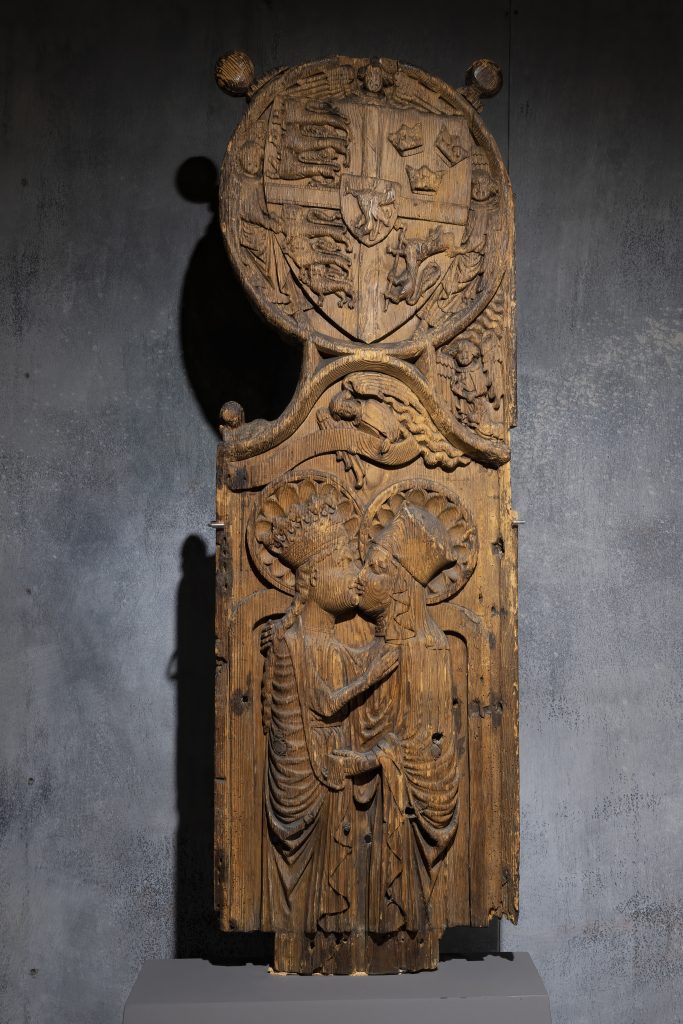
International conference in Brussels, in cooperation with the Polish Academy of Sciences
The three-day international conference at the House of European History in Brussels aims to bring together researchers working on the history of European unions over the last thousand years. Inter-state unions and composite polities have been a significant phenomenon in European history. Often formed on the basis of a legal agreement or contract between the political units that form them, they represent an alternative to imperial power structures mainly based on military expansion and conquest. However, political unions also existed within empires. Unions and composite systems played a greater role in the medieval and early modern history of Europe as a whole than empires. The legacy of these unions, whether regarded positively or negatively, forms an important part of cultures of memory in many European countries; their history is playing an increasingly significant role in the intellectual discourse on the prefiguration and models for the contemporary European Union.
Organisers / Scientific Directors
Saxon Academy of Sciences and Humanities: Prof. Dr. Wolfgang Huschner
Polish Academy of Sciences: Prof. Dr. Igor Kąkolewski
Registration
Registration form
Please register by 1 September 2026.
If you have any questions, please do not hesitate to contact us:
Dr. Kerstin Hohner, Agnes Silberhorn
Venue
House of European History
Rue Belliard / Belliardstraat 135, 1000 Brussels, Belgium
Travel information on the House of European History website
Please note: The House of European History opens at 1 pm on Monday and at 9 am on Tuesday and Wednesday. As you will need to go through a security check to enter the building, please allow plenty of time to get inside.
If you require accessible facilities, please let us know when you register so that we can assist you.
Languages
The conference languages are English, German and Spanish; simultaneous interpretation will be provided.
Abstracts
Abstracts and biographical details can be found here (PDF).
Programme
Monday, September 7, 2026
Opening of the Conference
1:00 p.m.
Registration
1:30 p.m.
Opening
Welcome
Constanze Itzel, Director of the House of European History
Opening remarks
Hans-Joachim Knölker, President of the Saxon Academy of Sciences and Humanities
Mirosława Ostrowska, Vice-President of the Polish Academy of Sciences
Introduction to the conference
Wolfgang Huschner, Vice-President of the Saxon Academy of Sciences and Humanities
Igor Kąkolewski, Director of the Center for Historical Research Berlin of the Polish Academy of Sciences
Section 1: Long-term existing unions
Moderator: Louis Sicking (Vrije Universiteit Amsterdam / University of Leiden)
2:00 p.m.
Carsten Jahnke (University of Copenhagen)
The rise, development, and fall of the so-called Kalmar Union (1375–1523). From shared interests to the struggle between the monarchy and the estates
2:30 p.m.
Ignacio Czeguhn (Free University of Berlin), Antonio Serafín Sánchez Aranda (University of Granada)
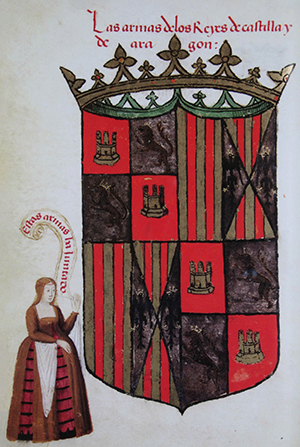
From the Trastamara to the Austrias (Habsburgs): The universal Hispanic Monarchy – matrimonial and political unions
Lecture in Spanish
3:00 p.m.
Discussion
3:30 p.m.
Coffee break
Moderator: Miloš Řezník (Chemnitz University of Technology)
4:00 p.m.
Sara Moreno Tejada (University of Elche)
From the Habsburgs to the Bourbons: The legal unification of the Spanish monarchy
Lecture in Spanish
4:30 p.m.
Petr Maťa (Austrian Academy of Sciences)
The Habsburg monarchy: A laboratory of political unions?
5:00 p.m.
Discussion
Tuesday, September 8, 2026
Moderator: Antonella Ghignoli (University of Rome “La Sapienza”)
9:30 a.m.
Wolfgang Huschner (Saxon Academy of Sciences and Humanities)
Between Acceptance, Tolerance, and Separation. Unions between the German Kingdom and the Italian Kingdom (10th–12th centuries)
Lecture in German: Zwischen Akzeptanz, Toleranz und Trennung. Unionen zwischen dem ostfränkisch-deutschen und dem italienischen Königreich (10. bis 12. Jahrhundert)
10:00 a.m.
Josep Serrano Daura (International University of Barcelona)
The dynastic union of the so-called Crown of Aragon (12th–18th centuries)
Lecture in Spanish: La unión dinàstica en la llamada Corona de Aragón (s. XII–XVIII)
10:30 a.m.
Discussion
11:00 a.m.
Coffee break
Moderator: Maciej Janowski (Institute of History, Polish Academy of Sciences)
11:30 a.m.
Alvin Jackson (University of Edinburgh)
Comparing the Anglo-Scottish union (1707), the British-Irish union (1801) and their legacies’
12:00 a.m.
Arnd Reitemeier (Georg-August University of Göttingen / Göttingen Academy of Sciences and Humanities in Lower Saxony)
The personal union between the Electorate of Hanover and Great Britain 1714–1837: expectations and preparations – experiment and institutional consolidation – low-profit but sustainable
Lecture in German: Die Personalunion zwischen dem Kurfürstentum Hannover und Großbritannien 1714–1837: erwartet und wenig vorbereitet – Experiment und institutionelle Verfestigung – gewinnarm nachhaltig
12:30 a.m.
Discussion
1:00 p.m.
Lunch break
Section 2: Short-term existing unions
Moderator: Ignacio Czeguhn (Free University of Berlin)
2:30 p.m.
Félix Javier Martínez Llorente (University of Valladolid)
Two experiences of matrimonial political union in the kingdoms of León/Castile and Aragon (1109 / 1474): legal and political foundations
Lecture in Spanish: Dos experiencias de unión política matrimonial en los reinos de León/Castilla y Aragón (1109 / 1474): fundamentos legales y políticos
3:00 p.m.
José Antonio Pérez Juan (University of Elche)
Napoleon’s Dynastic Project in Spain: Legitimacy, Reform, and Political Fracture (1808–1813)
Lecture in Spanish: El proyecto dinástico de Napoleón en España: legitimidad, reforma y fractura política (1808–1813)
3:30 p.m.
Discussion
4:00 p.m.
Coffee break
4:30 p.m.
Public Keynote
Robert Frost (University of Aberdeen)
When is a union not a union? Thoughts on composite political systems in late medieval and early modern Europe
Discussion
Miloš Řezník (Chemnitz University of Technology)
Wednesday, September 9, 2026
Section 3: Long- and medium-term existing unions
Moderator: Karin Friedrich (University of Aberdeen)
9:30 a.m.
Miloš Řezník (Chemnitz University of Technology)
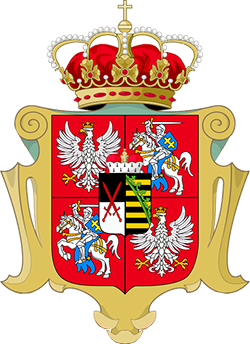
The Polish-Saxon Union 1697–1763 and its unexpected consequences
10:00 a.m.
Mindaugas Šapoka (Lithuanian Institute of History in Vilnius)
Union tested, Union endured: Poland–Lithuania and Saxony in the Great Northern War
10:30 a.m.
Stephan Flemmig (Friedrich Schiller University of Jena / Saxon Academy of Sciences and Humanities)
The Bohemian-Hungarian Personal Union (1490–1526) in the context of Jagiellonian policy in Eastern Central Europe
Lecture in German: Die böhmisch-ungarische Personalunion (1490-1526) im Kontext der
jagiellonischen Politik in Ostmitteleuropa
11:00 a.m.
Discussion
11:45 a.m.
Coffee break
Section 4: Retrospectives on political unions
Moderator: Robert Frost (University of Aberdeen)
12:15 p.m.
Ian Peter Grohse (Arctic University of Norway)
Between Nordic unity and national-historical identity. The Kalmar Union in Scandinavian historiography
12:45 a.m.
Discussion
1:00 p.m.
Lunch break
2:30 p.m.
Maciej Górny (Institute of History, Polish Academy of Sciences)
The Polish-Lithuanian unions in the politics of memory. The long shadow of the Commonwealth: Union and Federation as political concepts
3:00 p.m.
Igor Kąkolewski (Center for Historical Research Berlin, Polish Academy of Sciences)
Political unions and the legacy of premodern multi-culturalism in Central-Eastern Europe in the 20th and early 21st centuries
3:30 p.m.
Discussion
4:00 p.m.
Coffee break
4:30 p.m.
Closing discussion
Political Unions: A Curse or a Blessing in European History?
Ignacio Czeguhn, Robert Frost, Carsten Jahnke, Maciej Janowski